The Podcast Behind the Book: How Little Addicts Found its Readers Before it Found Shelves
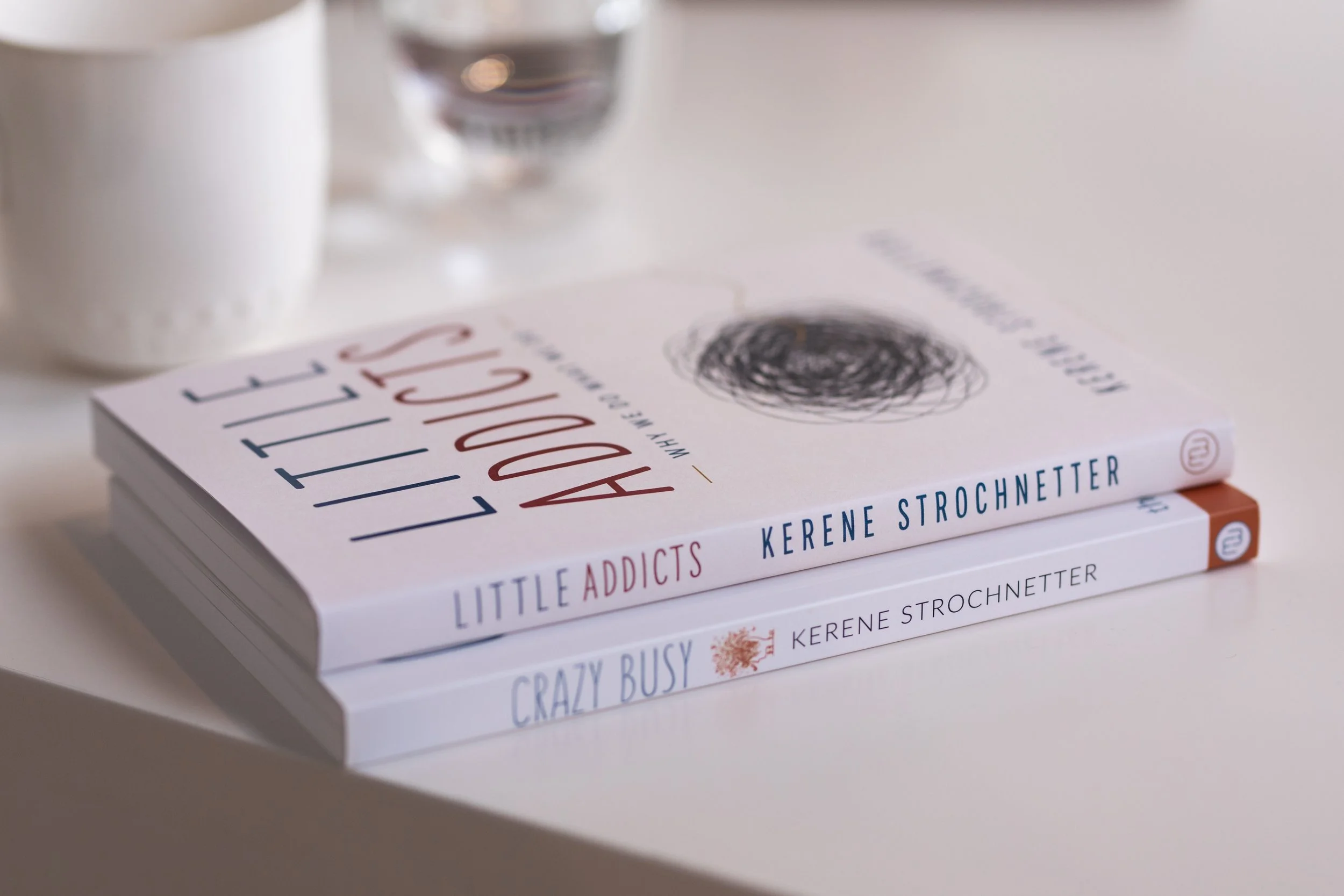
When Kerene Strochnetter sat down to write Little Addicts: Why We Do What We Do, she didn't set out to build a podcast. She just wanted better conversations.
As a leadership coach who spends her days helping people untangle the habits that quietly run their lives, she knew the book would only be as good as the thinking behind it — and she wanted to test that thinking against people who understood addiction, behaviour change, and neuroscience far better than she did.
So Little Addicts the podcast was born alongside Little Addicts the book. Not as a distraction from it, but as the thing that would carry it to readers long before it reached shelves.

A Frankly Podcasting Client Success Story: Kerene Strochnetter, Little Addicts
Why she started
In Kerene's own words:
"I originally started the podcast while I was writing the book because I wanted to have conversations with people who knew far more than I did about addiction, behaviour change, neuroscience, and our very human tendency to seek relief."
Over the course of season one, those conversations ranged widely. Guests ranged from people sharing powerful lived experiences of addiction and recovery to experts and practitioners exploring the psychology, neuroscience and human behaviour behind why we get hooked, and how we can change. It's the kind of range that only really works in long-form audio, where a guest can be properly heard rather than reduced to a soundbite.
When the podcast took over
Kerene expected the podcast to support the book. She didn't expect it to compete with it.
"What I didn't expect was how much those conversations would shape my thinking and ultimately strengthen the book. In fact, I enjoyed podcasting so much that at one point I rather inconveniently stopped writing the book!"
It's a familiar tension for anyone building a creative project out loud: the platform you build to support the work can end up reshaping the work itself. In Kerene's case, that wasn't a detour, it was the process finding its real shape. The conversations didn't just inform the book; they became part of how she thought her way through it.
The numbers and the bigger picture
By the end of season one, Little Addicts had reached around 3,400 downloads, which is a genuinely solid result for a niche, conversation-led show built around a book that hadn't even launched yet.
But the download count isn't really the headline.
"The podcast gave me a platform and an audience well before the book was published. It also allowed people to get to know me, my thinking, and the subject in a much more personal way than traditional promotion could."
That's the real power. Traditional book promotion gives people a moment to discover you — a press mention, a launch event, an interview. A podcast gives them weeks or months of it, in your own voice, at their own pace, before they've spent a cent. By the time Little Addicts the book reached shelves, its audience wasn't a cold list. It was a group of people who already knew Kerene's thinking, trusted her voice, and were invested in the conversation.
Success, honestly told
One of the things we appreciate most about Kerene is that she won't manufacture a tidier story than the one she actually lived.
"I can't honestly attribute a particular number of book sales or coaching clients directly to the podcast, so I don't want to invent a heroic ROI story! But it has unquestionably helped build awareness, credibility, and connection around my work more broadly. One of the biggest wins for me has actually been less measurable: the quality of the conversations, the people I've met through it, and the feedback from listeners who recognise themselves in what we're talking about."
"So perhaps my success story is slightly less 'I made $X from my podcast' and more 'I started a podcast to help me write a book, accidentally fell in love with podcasting, and ended up building a whole platform around an idea I care deeply about."
That's a success story we'll take any day!
What this means if you’re building something
Kerene's experience is a good reminder of what a podcast actually does well for creatives, and it isn't primarily selling. It's building the relationship that makes selling unnecessary.
If you're a writer, coach, artist, or founder promoting a creative project, a podcast lets people meet you before they meet the finished product. It turns an audience from a list of names into a community that has spent hours listening to how you think, not just what you're offering. And, as Kerene found, it can end up shaping the very thing you set out to promote. Because talking an idea through out loud, with people who know more than you, sharpens it in a way that writing alone rarely does.
None of that shows up cleanly in a spreadsheet. But awareness, credibility, and connection are exactly what a creative project needs most in its first year, long before a sales figure would tell you anything useful.
What’s next
Season one of Little Addicts is done, the book is out, and Kerene is already planning season two. If the first season is any indication, it'll be less about tying up a promotional campaign and more about continuing a conversation that's clearly still worth having.
As Kerene put it: "You did such a wonderful job editing Little Addicts, and the podcast became a much bigger part of the whole Little Addicts journey than I ever anticipated." We're proud to have edited season one, and even prouder of what she built around it.
Listen to Little Addicts on Spotify, and find Little Addicts and Crazy Busy on Kerene's website.